
Home | Cosmetic Dentistry | Receding Gums | Receding Gum Symptoms
What our experts have to say about receding gums
Dr Kaimakamis, our dentist with a special interest in Periodontics, sits down today to walk you through the alarming stages of receding gums and the signs to look out for to take action before it’s too late. With a Doctorate of Clinical Dentistry in Periodontology from the Barts and the London School of Medicine and Dentistry, Dr Kaimakamis has extensive experience treating patients with gum disease and helping them minimise the damage caused by receding gums.
What are receding gums? do you really have them?
Once gums have receded, they cannot grow back.
Also referred to as gingival recession, receding gums are an advanced sign of gum disease, where the gums begin to pull back from teeth, exposing the tooth roots.
A common problem can lead to further dental problems like sensitivity, tooth decay and even tooth loss. When left untreated, receding gum symptoms can be serious, and early intervention is crucial to saving your smile.
Key symptoms to look out for
Think you have receding gums? Here are key symptoms to look out for…
Teeth appear longer
One of the most obvious signs of receding gums is the visible exposure of tooth roots, which make teeth appear longer and narrower than before. You might even notice the gumline receding unevenly around certain teeth, which have more significant issues than others.
Heightened tooth sensitivity
When receding gums occur, the sensitive dentin layer is exposed, which leads to heightened tooth sensitivity, especially to hot, cold, sweet or acidic foods and beverages. Patients experiencing sudden or persistent tooth sensitivity should be aware that this might be a sign of gum recession.
Sensitivity caused by exposed tooth roots can be treated and rectified with dental treatments like composite bonding from £300 per tooth.
Bleeding gums
As bleeding gums is the most obvious sign of gum disease, they also occur as a result of gum recession. When gums recede and tooth roots are exposed, they’re more susceptible to irritation and inflammation, which causes the gums to bleed when being brushed or flossed.
Throbbing gums, discomfort or pain
When the gums recede, it’s common to experience discomfort and pain around the gum line, especially during activities like eating, brushing and flossing. The discomfort often is a result of the increased sensitivity or irritation caused by exposed tooth roots.
Gaps between teeth
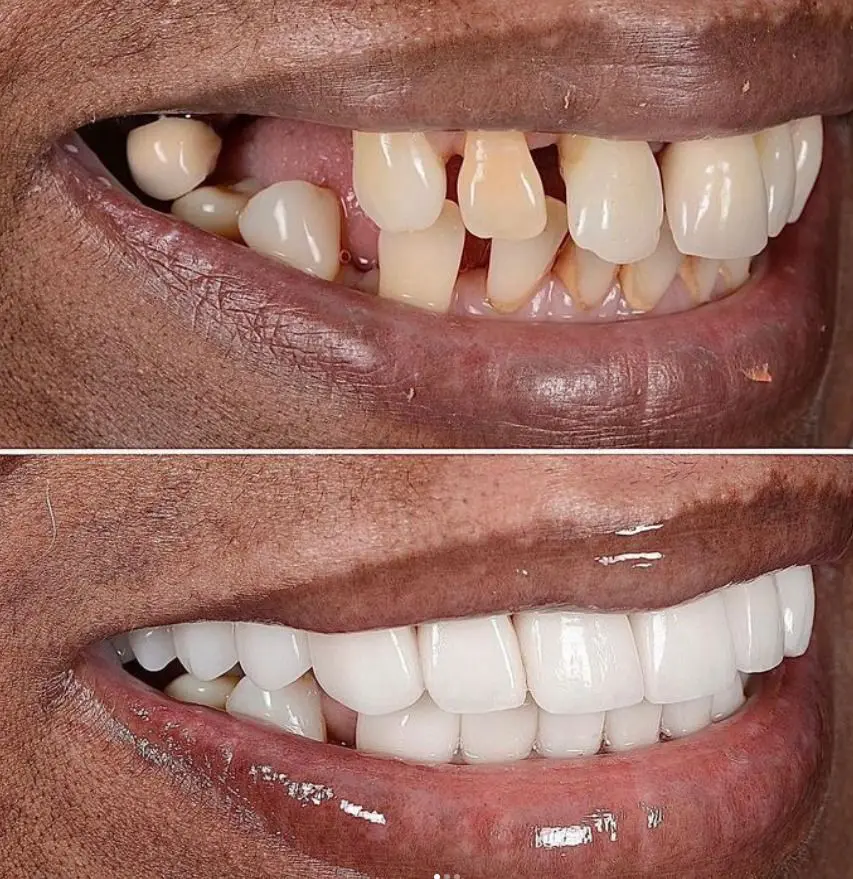
If you have gum disease and receding gums, you might begin to notice black triangular pockets forming between teeth or gaps beginning to form, which is one of the most notable symptoms. These changes will become more noticeable as the gum recession progresses.
Loose or wobbly teeth
In the most severe cases of gum recession, where gums have receded so far without treatment, the teeth are no longer supported, especially as the underlying bone might also be compromised, which might cause teeth to loosen.
Bad breath
As gum recession causes pockets and spaces to form between teeth, bacteria tend to accumulate, leading to bad breath or halitosis if it’s persistent. If you notice bad tastes in the mouth, or bad breath despite proper oral hygiene care, this might indicate underlying gum issues.
Dr Kaimakamis
DClinDent Perio, MPerio RCS(Ed) | Specialist in Periodontics
Dr Kaimakamis has developed a keen interest in emerging minimally invasive surgical and non-surgical procedures for receding gums.
Take fast action if you notice any symptoms
Whilst receding gums has several causes and can progress due to various factors, it’s important that if you experience any symptoms, see a dentist for a periodontal evaluation to save your future smile.
While gum recession cannot be reversed, it can be stopped and prevented.
Early intervention is the best, but some treatments exist to treat gum disease and gum recession.
EXCELLENT

Based on 172 reviews

Posted on Google 

Vanessa Cooper
Trustindex verifies that the original source of the review is Google. I fell over and lost half my tooth and my sons wedding was in 4 days, thank fully perfect smile were able to cap my front tooth. The colour match was amazing, now looks better than it did before. They were incredibly professional and also friendly. Made me feel at ease as soon as I arrived. Thank you again
Posted on Google

Amanda Grover
 Trustindex verifies that the original source of the review is Google.
Lovely friendly staff, Mr shah very helpful
Posted on Google

Steve Taylor
Trustindex verifies that the original source of the review is Google. After years of avoiding the dentist, I know actually enjoy the visits with Lauren, Bruna and the team - almost a miracle!
Posted on Google

Rachel Mccombe
Trustindex verifies that the original source of the review is Google. Choosing The Perfect Smile studio for my smile transformation was absolutely the best choice! Not only am i extremely happy with the end result but the after care and staff are just amazing. Could not recommend enough! Thank you all again ☺️
Posted on Google

Katie Garside
Trustindex verifies that the original source of the review is Google. Veneers at Perfect Smile:
After a recommendation in my home town and another in Turkey, I was still undecided. I was staying in Hertford and stopped in for a free consultation. I was so impressed that I decided to go with them despite the extra travel. If you are going to change your smile, make sure you are in the best of hands. I was fully aware of all costs up front and confident that would be respected. The design was significantly better than my original dentist and that had been fantastic. Dr. Shah is an artist. You will have a personalized, natural smile not an identikit row of horse teeth. He agonizes over the shape, shade, under tone. No detail is spared. I knew that if there were any problems that came up during the process or afterwards that I would be well taken care of. All important details.
I’m thrilled with the result and cannot recommend them highly enough.
Posted on Google

Ian Woodall
Trustindex verifies that the original source of the review is Google. 18 months of work, of which I was unsure about when we first discussed it but I cannot stress enough how it was the best decision to work with Perfect Smile - the results are amazing, far better than I thought and with an exceptionally natural look - thank you to all the team, would HIGHLY recommend
Posted on Google

Stephen Munnelly (Munners)
Trustindex verifies that the original source of the review is Google. Delighted with my new porcelain veneers. Dr Shah and the team at Perfect Smile have all been very informative, professional and excellent from the start to the end of the process and I can’t thank them enough.
I would highly recommend them and my only regret is not getting it done sooner. Big smiles all round.
Posted on Google

Irene, Nightingale
Trustindex verifies that the original source of the review is Google. The best treatment I have ever had. Very nervous with dentists and 89 years old, but Lauren and her colleague treated me with respect which is unusual many times in today’s world. Had a tooth extracted and all good. Thank you.
Posted on Google

Felicia Althamer
Trustindex verifies that the original source of the review is Google. My 13-year-old son, who wears braces, recently visited Bruna @ Perfect Smile Studio for a teeth cleaning appointment with the hygienist, and we had a really positive experience. She was incredibly polite, patient, and professional throughout the visit. Bruna explained the whole cleaning process clearly and made sure my son felt calm and comfortable the entire time. It’s not always easy for teenagers to feel relaxed during dental appointments, especially with braces, but she made the experience smooth, reassuring, and stress-free. Highly recommend her!