
What exactly are dental veneers? How do they work, and how can they help you change your look and the way you feel about your smile? Learn more about the process involved and what your journey might look like…
What are dental veneers? Understand the differences
You have two main types of veneers: porcelain and composite.
Porcelain uses thin, medical-grade ceramic shells that are hand-made and bonded to the front of your tooth using dental cement. Composite, on the other hand, is more typically hand-sculpted, not prefabricated.
Despite being incredibly thin, they are powerful, comparable to natural teeth and can be used to mask problems like discolouration, uneven tooth shape and size, misalignment and gaps.
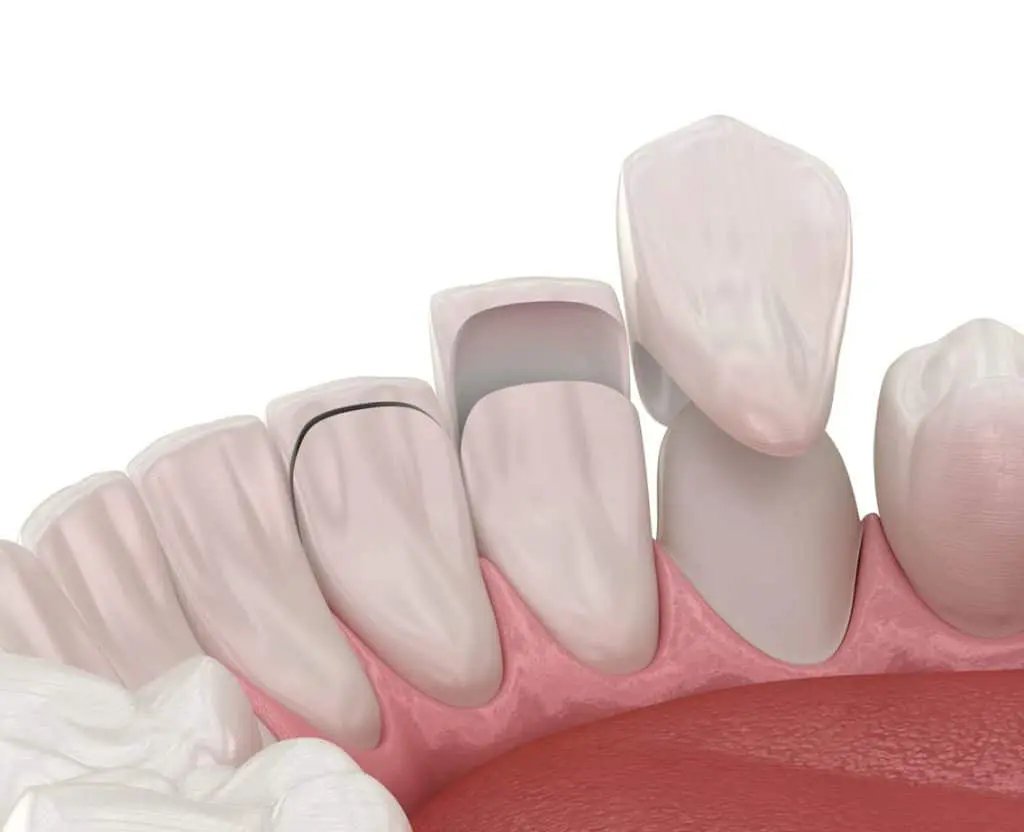
Quick overview of how veneers work
- Veneers work by replacing the tooth’s visible layer
- A custom-made shell is applied to the front surface of the tooth
- Veneers improve the shape, colour, length or alignment of your teeth
- The process relies on the veneer bonding to the tooth’s enamel
- To bond, veneers require minimal prep (0.3-0.5mm) to create space
- Some types of veneers require no preparation
- Porcelain veneers mimic natural enamel (translucency, colour layering and texture)
- Treatment involves three core stages: consultation, preparation, and fit
Diving deeper into the mechanics
Veneers, whether composite or porcelain, are a single layer and do not function as a whole tooth, unlike dental crowns.
Whereas dental crowns require shaving down the tooth to fit, veneers are conservative and minimally invasive.
Consider them part of a larger structure: the veneer enhances the front aesthetics while still relying on the tooth’s underlying structure.
Unlike crowns, dental veneers follow a precise biological and technical process that involves digital smile design, tooth preparation, ceramic layering, and adhesive bonding.
The core principles
Dental veneers perform three main functions simultaneously. These involve:
- Replacing the aesthetic enamel layer of the front tooth with a ceramic shell.
- Strengthens and protects the underlying tooth with adhesive bonding.
- Transforms the appearance and function of the tooth through shape, shade and contour.
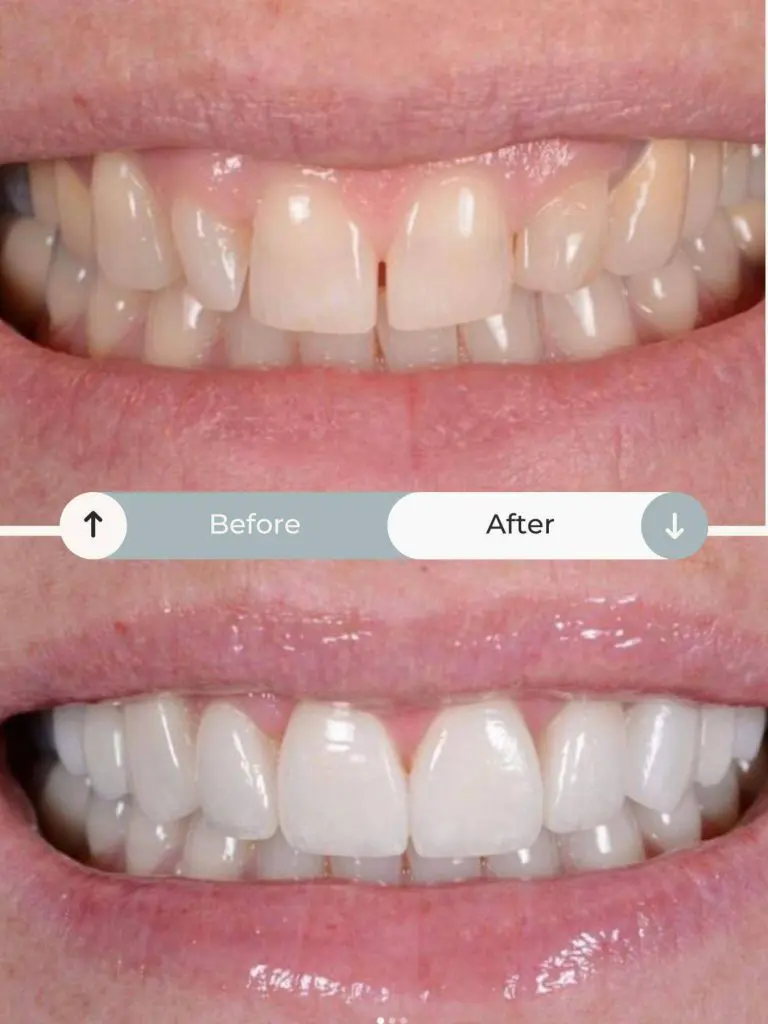
Dental veneers work by mimicking natural teeth
Dental veneers mask imperfections in your smile, not by fully replacing the tooth, but by covering the front surface to create the illusion of a perfect smile.
Typically, porcelain and ceramic veneers are engineered to perfectly mimic natural teeth, down to micro details such as enamel light refraction, surface gloss, internal translucency, and microtexture.
All of these components give veneers their natural, tooth-like appearance.
How dental veneers act like natural enamel
- Reflects light like natural enamel
- Resistant to chips and staining
- Maintains colour long-term
- Layered to replicate depth and character