

When comparing the differences between composite bonding and veneers, it is essential to differentiate between their processes, timelines, results, functionality, cost, and durability.
Home | Composite Bonding | Composite Bonding vs Veneers
Which treatment is right for you
- Do you want to feel more confident in yourself and your smile?
- You’ve likely researched two of the most popular cosmetic dental procedures in the UK: dental veneers and composite bonding.
- While both tackle similar smile issues, their procedures and final results differ significantly, making it essential to clearly understand these differences before booking your consultation.

The differences
Many patients do not realise that composite bonding is used to improve a specific part of a tooth, not the entire tooth.
Teeth veneers, on the other hand, work on concealing the entire tooth, giving it a complete makeover.
So, if you want to make more drastic changes, composite bonding won’t be the proper treatment for you—think of it for only minor cosmetic tweaks.
That said, patients can still opt for bonding that treats the whole tooth—and this is with advanced composite veneers.
The differences
At the Perfect Smile, we use both composite bonding and teeth veneers across our cosmetic cases and will make recommendations based on a patient’s set criteria:
Fastest treatment timelines
Winner 🏆: Composite bonding
Veneers, especially porcelain veneers, are handcrafted in a dental laboratory to your unique specifications, which means they take approximately three weeks to create.
Composite bonding, like composite veneers, is completed in a single appointment, typically lasting around an hour.
Therefore, opting for composite bonding means shorter treatment timelines and fewer appointments.
Problems they can fix
Winner 🏆: Veneers
In terms of versatility in the range of problems they address, dental veneers take the crown because they provide a solution for a much broader range of smile issues than bonding can.
For example, while they target and correct many of the same problems, veneers will still apply when the issue is more severe – composite bonding looks to make minor corrections.
The most cost-effective
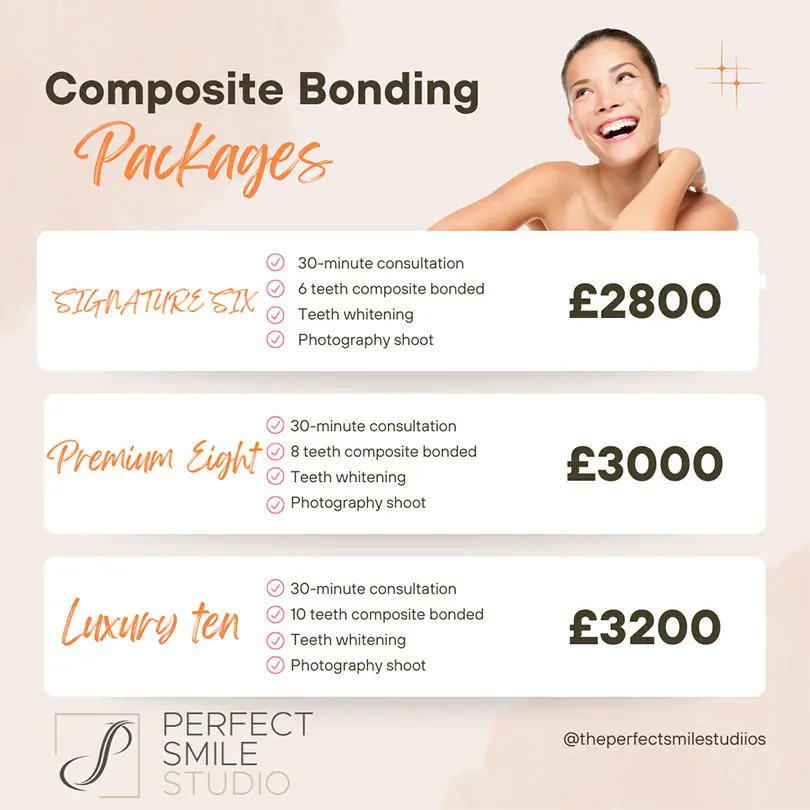
In the short term, composite bonding will be your lowest-costing option. It is significantly cheaper than veneers, making it budget-friendly.
That said, composite bonding does not last forever and is not resistant to staining or chips; it needs more frequent repairs and replacements, which means you could spend much the same amount over time.
The exception here is composite veneers, which cost more than bonding because they involve applying them to the whole tooth instead of a slight portion, but are less expensive than traditional porcelain veneers.
Explore composite bonding on finance, or dental veneers on finance.
Most natural-looking result
Winner 🏆: Veneers
When it comes to natural-looking finishes and incredible transformations, porcelain veneers will win every time.
That’s not because so much artistry and time have gone into designing and making them, but because the porcelain material perfectly mimics natural teeth and even reflects light like real teeth.
Veneers, which are made from porcelain, are also resistant to staining, meaning they maintain their appearance for longer.
Materials used
Winner 🏆: Veneers
Of course, dental veneers are the winner for the best materials used, because they’re constructed from high-quality porcelain, which has better properties and is much more durable than composite resin.
Tooth preparation needed
Winner 🏆: Composite bonding
While non-invasive dental veneers, like Lumineers, require no preparation, traditional porcelain veneers will require slight enamel etching (around 0.5mm to be placed).
Composite bonding, on the other hand, like composite veneers, is applied directly to the tooth in layers, meaning no prior preparation is required to help them adhere.
Functionality and strength
Winner 🏆: Veneers
Dental veneers are stronger and more resistant to wear and tear over time, including stains, making them much more robust than composite bonding.
Bonding while still strong, is more susceptible to chips and breaks, but will be easier to repair over time than dental veneers, which will typically require replacement instead.
Aftercare and maintenance
Winner 🏆: Composite bonding
Composite bonding is much simpler to maintain, not to mention cheaper to repair and replace.
You will likely have more problems with composite than porcelain because you might occasionally suffer from chips and stains.
On the other hand, dental veneers can be managed just like regular teeth, but patients should be careful handling them to avoid chips and cracks.
Both will require regular check-ups and strong oral hygiene to extend their lifespan.
Longevity and durability
Winner  : Veneers
- Dental veneers, which last up to 15 years, are one of the most durable cosmetic treatments on the market.
- Composite bonding, on average, lasts around 10 years less and typically requires replacement around year 5.