
Fixed braces, also known as train tracks, metal, or traditional braces, have been a staple dental treatment for decades.
A broader choice of fixed options
Fixed braces are commonly used in NHS orthodontic practices because they produce predictable and reliable results, are also available in private practices like ours for adults who do not qualify for free treatment. Private practices can also offer more options for fixed brace treatment, such as white tooth-coloured fixed braces and even incognito options.
Types of fixed braces on offer
Fixed braces don’t have to be confined to the bulky metal form; alternative options exist like:
- Coloured braces: Make your treatment more fun with a pop of colour from £2,000.
- Ceramic braces: These tooth-coloured braces offer a low-visibility alternative to traditional, fixed metal braces, minimising the visual impact. They cost from £2,500.
- Lingual braces: Another less visible option is lingual braces, which sit on the inside of the teeth rather than the outside. They cost from £5,000.
Coloured braces, ceramic braces and lingual braces are available privately at our practice in Hertfordshire and are suitable for all ages.
What is better fixed braces or Invisalign?
Traditionally, metal braces are the most popular teeth-straightening choice, which might be because they’ve been the most prominent treatment offered by dental practices and the NHS since the dawn of time. But other orthodontic treatments like Invisalign, which have only gained popularity in the last decade, have already straightened millions of smiles.
Invisalign treats many orthodontic problems, from overbites to small gaps between teeth. However, even Invisalign has its limits. It won’t be recommended in complex cases that require significant bite movement and severe crowding or in cases of large gaps between teeth. Invisalign is not always the effective treatment option either for rotating or extruding teeth. Traditional braces might be more effective in these instances.
Guide to fixed braces
Learn everything you need to know about fixed braces and how they work.
How do they work?
Fixed braces use small brackets attached to each tooth, joined by a wire adjusted over time to create gentle pressure that aligns your teeth and bite. Fixed braces are fixed, which means they cannot be removed for the duration of your treatment. Removable options, however, exist.
How long do fixed braces stay on for?
The length of your fixed brace treatment depends on the reason for your treatment. For example, if you have minor to mild bite discrepancies and crowding, social six-lingual braces can straighten your teeth in under six months. However, patients typically opt for fixed braces due to severe bite problems, which require more time, so on average, you can expect any fixed brace treatment to last anywhere from six months to three years. Exact breakdowns will be given to you during a consultation.
How much do fixed braces cost?
For fixed adult orthodontics, our prices begin at £2,500 and can reach up to £5,000, depending on the type of fixed braces you choose.
- Metal braces cost: From £2,000
- Ceramic braces cost: From £2,500 (one arch) to £3,500 (two arches)
- Lingual braces cost: From £5,000
Fixed braces on the NHS vs private
Private and NHS practices offer the same treatment for fixed metal braces. However, the NHS do not offer white braces or orthodontic treatment for patients over 18 unless health reasons warrant the treatment for an adult.
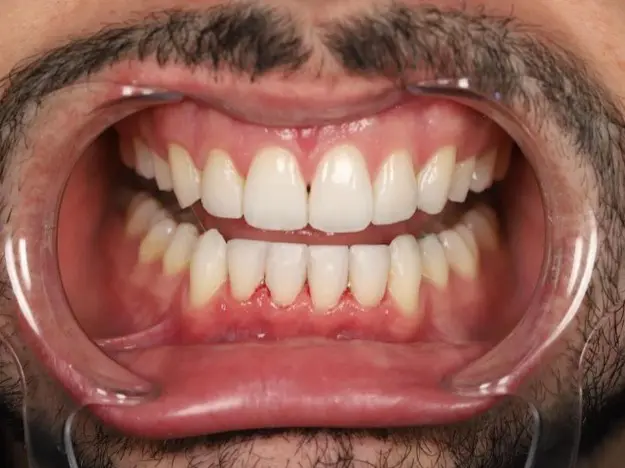
Before & After Gallery
See what our patients look like before and after braces so you can gain a better idea of how they’re going to look and work for you.