

A deep bite is a type of malocclusion (class II) that’s defined as a misalignment of the vertical dimensions of the teeth and jaws. Depending on your unique condition and type of treatment, it can take anywhere from 12-24 months to realign a deep bite, with treatment options including braces, clear aligners (Invisalign) or jaw surgery for the more complex cases.
Home | Cosmetic Dentistry | Deep Bite
Defining a deep bite – what is it?
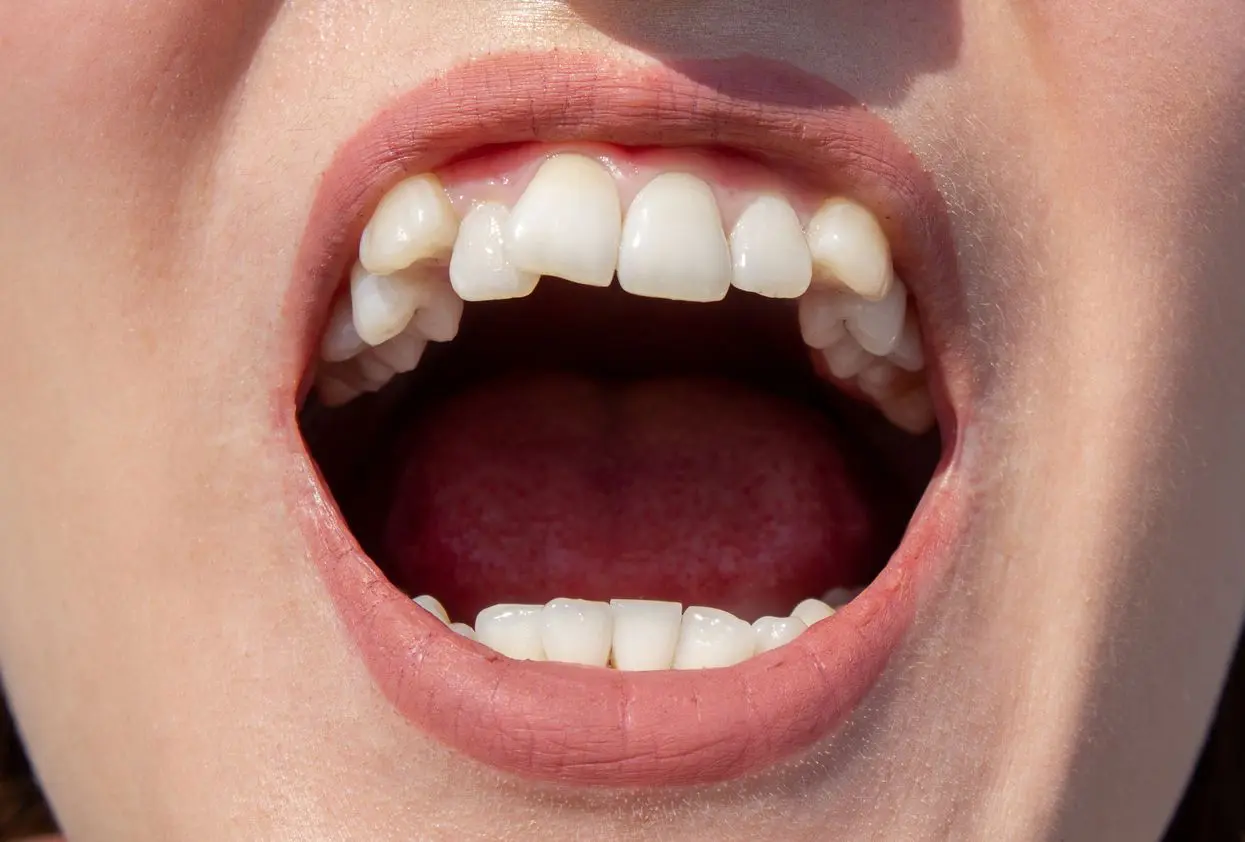
How do you know if a bite is deep? A deep bite is characterised by an excessive overlap of the upper front teeth over the lower front teeth.
So, when the upper front teeth come too far over your bottom front teeth (more than 4mm) when your jaw is closed, it’s considered as a deep bite.
Deep bites can affect anyone from young children to adults – with 34% of the population being affected, 8% of which are children in the UK who have 6mm or more (severe overbite).
Does a deep bite need to be corrected?
Treatments for a deep bite – each case is assessed individually
It’s advisable that patients with deep bites seek treatment as it can lead to larger issues that concern your wider oral health and can result in the teeth becoming severely worn down.
Even if you’re an adult – it’s never too late to correct a deep bite. There are several ways a deep bite can be addressed, however the treatment our orthodontists recommend will depend on the size and extent of your deep bite.
Tooth removal
In the case of overcrowding and having too many teeth in your mouth, our dentists might recommend the removal of certain teeth, which will help provide vital space to help realign your bite.
Often, teeth in the back of the mouth are removed – and in the case of children with a deep bite, our orthodontists might recommend the removal of baby teeth to help the permanent teeth have enough room to come in correctly.
Fixed braces
A tried and tested way to realign class II malocclusions are with fixed braces.
By installing brackets on your teeth, which are connected to wires our orthodontists will tighten over time, we can help guide your teeth, jaw and bite back into correct alignment.
However, as fixed metal braces can sometimes make teenagers and adults alike feel insecure, white options and even colours are available.
We also offer lingual orthodontics, where we can place the braces on the inside of the teeth as opposed to the outside.
See braces options:
Clear aligners/Invisalign
Invisalign is a popular treatment capable of straightening class II malocclusions like deep bites very comfortably and discreetly.
The clear, removable trays gradually move your teeth overtime, moving your teeth into the next stage with every aligner change (you’ll likely swap for new aligners every 1-2 weeks).
Learn more about Invisalign:
Orthognathic surgery
In some of the most severe and complex circumstances, where the deep bite is skeletal (caused by your bones), our dentists might recommend jaw surgery to correct a deep bite.
This type of treatment is more suitable in the cases of older teens and adults, whose jaws are no longer developing or growing.
Following surgery, patients will also have to wear braces or another dental appliance to complete their treatment.
Surgery is conducted under general anaesthesia and involves several weeks of recovery.
There are additional factors that might affect your treatment and plan, for example, your age might dictate the treatment you receive, as well as other conditions related to a deep bite, which will also need to be addressed during treatment.
Guide to deep bites
Symptoms of a deep bite
Deep bite side effects:
- Difficulty chewing or breathing
- Mouth breathing
- Speech problems (lisps can occur)
- Sores or mouth ulcers form on the roof of the mouth
- Chipped or worn-down teeth
- Inflammations of the gums
- Headaches and migraines
- Receding chin and buck teeth
- Sleep apnea
- Protruding front teeth
- Premature loss of front teeth
- Temporomandibular joint pain
Deep bites rarely correct themselves – even if your child’s mouth is still developing. In adulthood, the jaw has fully formed, so patients can expect symptoms to usually get worse with age.
How much does it cost to fix a deep bite?
- Fixed braces from
- Ceramic braces from
- Lingual braces from
- Invisalign from
- Tooth removal from
What’s the difference between a deep bite and a closed bite?
A deep bite is a type of malocclusion where the upper incisors protrude too far over, covering the incisors of the lower jaw. There is no difference between a deep bite and a closed bite as they are synonymous. It can also be referred to as a deep bite.
Deep bite vs overbite
Deep bites are a type of an overbite – with the main difference between the two being that the degree of overlap in a deep bite is larger between the upper and lower teeth. An average, normal overbite is when there’s a slight overlap of the upper teeth between 1-2mm. Deep bites can be up to 6mm.
Causes of a deep bite
Deep bites can develop for several reasons, including genetics, a jaw that’s too small, missing teeth, or not having enough room in your mouth when your permanent teeth developed.
Complications of a deep bite
Complications from a deep bite can arise when they’re left untreated.
Complications like worn down teeth, cramped teeth, problems when eating and drinking, gum disease, sores and ulcers, for example can develop.
When you treat a deep bite, you can avoid these complications and at the same time, take care of any aesthetic concerns you have with your smile.
Corrections later in life can lead to more invasive and expensive treatments.
Will you have to wear a retainer?
Retainers can either be removable or fixed and you’ll have to wear them following your treatment to prevent retention. Patients will likely be recommended to wear them overnight for a few months or year, with the best outcomes featuring patients who wear them indefinitely.